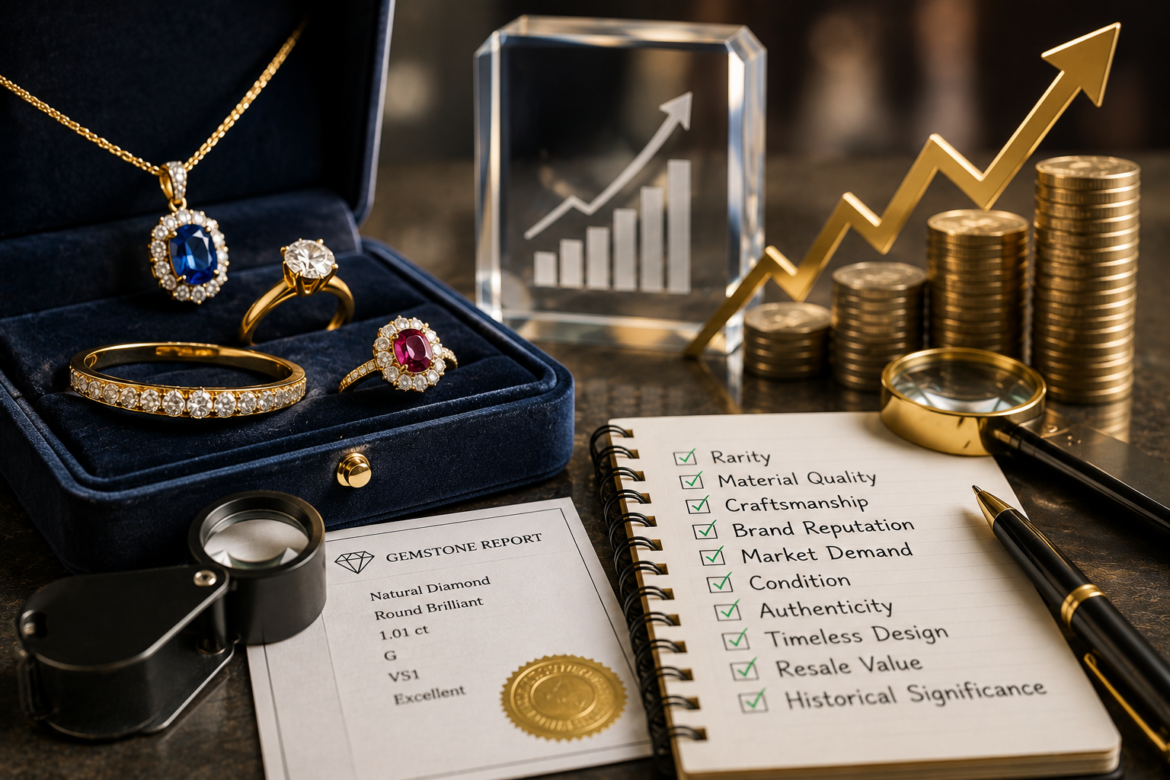
Jewelry can be beautiful, personal, and valuable all at once. But when people think about jewelry as an investment, the real question is not just whether it looks expensive today — it is whether it may hold or grow in value over time.
If you want to judge the future growth potential of a jewelry investment, you need to look beyond shine and style. You need to examine rarity, craftsmanship, materials, brand reputation, market demand, and a few other important signals that tell you whether a piece has lasting investment strength.
Why Jewelry Can Grow in Value
Not every piece of jewelry becomes more valuable over time, but some do. The jewelry that tends to perform well usually has a mix of emotional appeal and market value. That means it is desirable now and still likely to be desirable in the future.
The future growth of jewelry depends on supply, demand, quality, and public interest. If a piece is rare, well-made, and connected to a strong brand or precious material, it may have a better chance of increasing in value. On the other hand, trendy pieces with low-quality materials may lose appeal quickly.
For investors, the key is to spot jewelry that has staying power. A good investment piece should not only look attractive but also carry characteristics that support long-term value growth.
Indicator 1: Rarity
Rarity is one of the strongest signs of future value. The harder it is to find a piece, the more likely it may become desirable later.
This can include limited-edition designs, antique pieces, one-of-a-kind creations, or jewelry made with rare gemstones and metals. Pieces with unique features often attract collectors because they cannot easily be replaced. In the jewelry market, scarcity often creates interest, and interest can drive prices upward.
When checking rarity, ask simple questions:
- Was the piece made in limited numbers?
- Is the gemstone hard to source?
- Is the design unusual or discontinued?
- Does it belong to a vintage or collectible category?
The more “yes” answers you get, the stronger the rarity factor may be.
Indicator 2: Material Quality
The quality of the materials used in jewelry matters a lot. Even the most beautiful design will struggle as an investment if the materials are weak or unstable.
Precious metals like gold, platinum, and silver often hold more long-term value than plated or base metals. In gemstones, natural stones with good color, clarity, cut, and carat weight usually perform better than low-grade stones. Durability matters too, because jewelry that wears out quickly may lose both beauty and resale value.
Look for these signs of material quality:
- Solid precious metals instead of plated finishes.
- Natural gemstones with strong grading.
- Good durability for everyday wear.
- Minimal flaws that affect appearance or strength.
High-quality materials give a piece better odds of staying attractive and valuable over time.
Indicator 3: Craftsmanship
A jewelry piece may use expensive materials, but craftsmanship can make the real difference. Fine workmanship often separates ordinary jewelry from investment-worthy jewelry.
Craftsmanship includes how neatly the piece is assembled, how securely the stones are set, and how balanced the design feels. A well-crafted item is usually more durable, more comfortable to wear, and more appealing to collectors or future buyers.
Details matter here. Clean lines, secure clasps, polished finishes, and careful stone placement can all support future value. Poor craftsmanship, even in expensive jewelry, can reduce desirability and make resale more difficult.
If the jewelry looks and feels professionally made, that is a positive sign.
Indicator 4: Brand Reputation
Brand name can play a huge role in jewelry investment potential. Well-known luxury brands often hold value better because buyers trust them and actively seek them out.
A strong brand creates confidence in quality, authenticity, and status. That reputation can help a piece sell faster and at a better price later. In some cases, branded jewelry also becomes collectible, especially when the design is iconic or part of a famous collection.
When checking brand strength, consider:
- Is the brand widely recognized?
- Does it have a history of quality and luxury?
- Are its pieces in demand on resale markets?
- Does it have collectible or signature designs?
A respected brand does not guarantee future growth, but it can strengthen the investment case.
Indicator 5: Market Demand
A jewelry investment grows best when people still want it. Demand is one of the clearest signs of future value.
Some styles remain popular because they are timeless, while others rise because of fashion trends, celebrity influence, or cultural interest. If a piece is admired by both current buyers and collectors, it may have stronger future growth potential.
To assess demand, look at:
- How often similar pieces are sold.
- Whether buyers search for the brand or style regularly.
- If the design is considered classic or trendy.
- Whether the category has long-term collector interest.
Demand can change, so it helps to focus on jewelry with broad appeal rather than short-lived hype.
Indicator 6: Condition and Preservation
Condition is a major factor in jewelry value. A rare or expensive piece can lose much of its investment potential if it is scratched, damaged, or poorly maintained.
Collectors and buyers usually prefer jewelry in excellent condition. Original shine, intact settings, and minimal wear can improve resale prospects. Even small issues, such as missing stones or a worn clasp, can reduce value.
Proper storage and maintenance matter too. Jewelry kept in good condition is more likely to preserve both beauty and market value. If you are buying for investment, always examine the condition carefully and ask whether the item has been repaired, altered, or heavily worn.
Indicator 7: Authenticity and Certification
Authenticity is non-negotiable. A piece of jewelry may look valuable, but without proof, its future growth potential becomes much weaker.
Certification from a trusted gemological laboratory or proof from a reputable seller gives buyers confidence. Certificates for diamonds, gemstones, and luxury branded items help verify what the piece actually contains and whether it matches the seller’s claims.
Important documents may include:
- Gemstone grading reports.
- Metal purity marks.
- Brand authentication papers.
- Original receipts or provenance records.
When a piece is well-documented, it is easier to resell and easier to trust. That support often improves its investment appeal.
Indicator 8: Historical or Emotional Significance
Jewelry with a story often performs better than jewelry without one. Pieces linked to history, culture, or emotional meaning can attract collectors and buyers who value more than just materials.
Vintage jewelry, heirloom pieces, and designs tied to famous eras may carry extra appeal. Sometimes a piece becomes valuable because it reflects a certain time period, style movement, or cultural moment. Emotional significance can also increase demand if the jewelry has a meaningful backstory or celebrity connection.
This does not mean every sentimental item becomes a strong investment. But a meaningful history can make jewelry more desirable and help it stand out in the market.
Indicator 9: Timeless Design
Trendy jewelry may look exciting now, but timeless designs often have better long-term growth potential. Classic styles tend to stay in demand because they do not rely on one season or one fashion wave.
Simple gold chains, elegant diamond studs, solitaire rings, and refined bracelets often keep their appeal for years. These designs are easier to wear, easier to resell, and less likely to feel outdated.
Timeless jewelry usually has:
- Clean and balanced design.
- Broad style appeal.
- Long-lasting wearability.
- Minimal dependence on short-term trends.
If a piece looks elegant today and still likely to look elegant ten years from now, that is a very good sign.
Indicator 10: Resale Market Performance
A smart way to judge future growth is to look at how similar jewelry performs in the resale market. If a category consistently resells well, that is a strong signal.
Check auction results, secondhand luxury platforms, and collector marketplaces. See whether pieces like the one you want are holding value or appreciating. Compare selling prices with original retail prices and notice how quickly buyers move on similar items.
Questions to ask include:
- Do similar pieces sell quickly?
- Are buyers willing to pay a premium?
- Does the item keep value over time?
- Is there strong interest in auction or resale platforms?
A healthy resale market often points to better investment potential.
How to Spot Strong Jewelry Investments
Once you know the main indicators, the next step is putting them together. A strong jewelry investment usually does not depend on just one factor. It is the combination that matters.
A good candidate often has:
- Rare or limited availability.
- High-quality materials.
- Excellent craftsmanship.
- Strong brand recognition.
- Steady market demand.
- Great condition and certification.
- Timeless design and resale interest.
If a piece checks several of these boxes, it may have better future growth potential than average jewelry.
Common Mistakes to Avoid
Many people focus only on appearance and forget the investment side. That can lead to poor choices.
Here are some common mistakes:
- Buying only because a piece looks flashy.
- Ignoring material quality.
- Overpaying for trendy designs with weak resale value.
- Skipping certification or authenticity checks.
- Forgetting to research resale demand.
A beautiful piece is not always a smart investment. The goal is to find jewelry that is attractive, authentic, and marketable over time.
Assessing Future Growth
Assessing the future growth potential of a jewelry investment takes more than a quick glance. You need to look at rarity, material quality, craftsmanship, brand reputation, demand, condition, authenticity, design, and resale performance. These indicators help you separate true investment pieces from jewelry that is simply pretty today.
In the end, the best jewelry investments are the ones people will still want tomorrow. If a piece is well-made, well-documented, and desirable now and later, it has a much better chance of growing in value over time.