Jewelry can be a beautiful way to diversify your portfolio—but pinning down its true investment value is trickier than it looks. Unlike stocks or gold bars, each piece tells its own story through materials, craftsmanship, brand, and market mood. That uniqueness is part of the charm, yet it’s also the root of the biggest valuation challenges investors face.
This guide breaks down the real-world hurdles in valuing and appraising jewelry for investment, in plain language and with a helpful tone. You’ll learn why appraisals often miss the mark for resale, how market fragmentation and fees eat into returns, and what practical steps can make your jewelry investing smarter and safer.
Why Jewelry Valuation Is Harder Than It Looks
Jewelry isn’t a standardized asset. Two rings with “similar” diamonds can trade at very different prices because of cut quality, fluorescence, symmetry, brand, design era, and even current fashion trends. Add colored gemstones, and the variables multiply: origin, treatments, saturation, and rarity can swing value dramatically.
Another layer of complexity is purpose. An appraisal written for insurance replacement is not the same as a fair market value for estate tax, and neither equals what you’ll actually get when selling on the secondary market. Insurance appraisals often lean higher to cover full retail replacement costs, while resale prices reflect what a buyer will pay today after fees and markups. Confusing these purposes leads to unrealistic expectations and poor investment decisions.
On top of that, jewelry values move with raw material prices, currency shifts, consumer tastes, and brand prestige. A five- or ten-year-old valuation is very likely outdated because the market doesn’t stand still. Trends in certain makers, stones, or design styles can lift or lower desirability quickly, making historical prices a shaky guide for today’s investment thesis.
The Fragmented Market and the Fee Trap
One of the biggest challenges is that jewelry doesn’t trade on a single, transparent exchange. The market is split among auction houses, specialty dealers (antique, diamond, colored stones), retail buyers, and metal refiners—each with different audiences, pricing models, and markups. Without a central price feed, “market value” becomes a range rather than a single number, and that range can be wide.
Transaction costs are another major hurdle. Auction houses commonly charge both a seller’s commission and a buyer’s premium. Combined, these fees can exceed 45% in many cases, which means the net proceeds you receive can be far below the appraised fair market value. That friction makes jewelry one of the higher-cost asset classes to liquidate, even compared to fine art.
Retail markups add to the problem. Buying from standard retail stores often means paying 200–400% above underlying material and craftsmanship value. That immediate gap is hard to overcome through appreciation alone, especially over reasonable holding periods. In practice, many investors discover that retail-bought pieces must climb steeply just to break even after fees and resale discounts.
Liquidity is the third piece of this puzzle. Unlike stocks or bonds, you can’t instantly sell jewelry at a quoted market price. Finding the right buyer, negotiating, authenticating, and arranging secure transfer takes time and effort. In a hurry, sellers often accept lower offers, which further widens the gap between appraisal and realized value.
Appraisal Quality, Standards, and Subjectivity
Not all appraisals are created equal—and that’s a core challenge for investors. In the U.S., there’s no single federal licensing body that governs jewelry appraisers. Credentials vary widely, from weekend certificates to advanced gemological training. Two qualified appraisers can look at the same piece and reach different values because visual assessment is inherently subjective. Color perception, lighting, fatigue, and even client dynamics can nudge judgments.
Purpose-driven valuation standards add more noise. Insurance replacement appraisals aim to cover the cost of buying a similar item at retail today. Estate or tax appraisals target fair market value between willing buyers and sellers. Resale or liquidation appraisals focus on what the secondary market will actually pay after fees. Mixing these up leads to confusion: a high insurance number doesn’t mean you can cash out at that price.
Data sourcing matters too. Reliable appraisals depend on current, comparable sales and transparent methodologies. Outdated replacement-cost models, missing disclosure of gem treatments, or misidentified origins can skew values by 20–45% or more. Even honest, well-meaning appraisers can overshoot if they’re not anchored to recent, like-for-like transactions in the right channel (auction vs dealer vs retail).
Technology is helping narrow the gap. Advanced imaging, AI-assisted gem analysis, spectroscopic tools, and blockchain provenance records are making appraisals more consistent and less dependent on individual eyesight or mood. Still, human judgment remains central, and discrepancies of 20–40% between appraisers are not uncommon without rigorous, standardized processes.
Market Volatility, Trends, and the “Right Piece” Problem
Jewelry values don’t just track gold or diamond prices—they track taste. Consumer preferences shift with fashion cycles, celebrity influence, and cultural moments. A design that’s hot today may cool in a few years, while vintage or signed pieces from certain houses can hold or gain value due to scarcity and brand equity. That makes timing and selection critical for investors.
Colored gemstones add another layer of volatility. Prices can swing with new mine discoveries, treatment disclosures, origin certification, and changing demand for specific hues. A sapphire from a famed origin may command a premium, but if the market’s attention shifts or supply increases, that premium can compress. Investors need to watch not only material costs but also narrative and rarity.
The “right piece” problem is real. Many investors lose money because they buy the wrong category—often retail pieces with heavy markups, mass-produced designs, or stones with undisclosed treatments. Investment-grade jewelry tends to emphasize material purity, artisanal scarcity, and secondary-market liquidity. Without that lens, appreciation rarely overcomes the initial deficit created by retail pricing and future fees.
Practical Steps to Reduce Valuation Risk
You can’t eliminate all uncertainty, but you can lower it with a few smart habits. Start by clarifying the purpose of your valuation. If you’re investing, you need a resale-oriented view, not just an insurance replacement number. Ask your appraiser which standard they’re using and how it maps to likely exit channels (auction, dealer buyback, private sale).
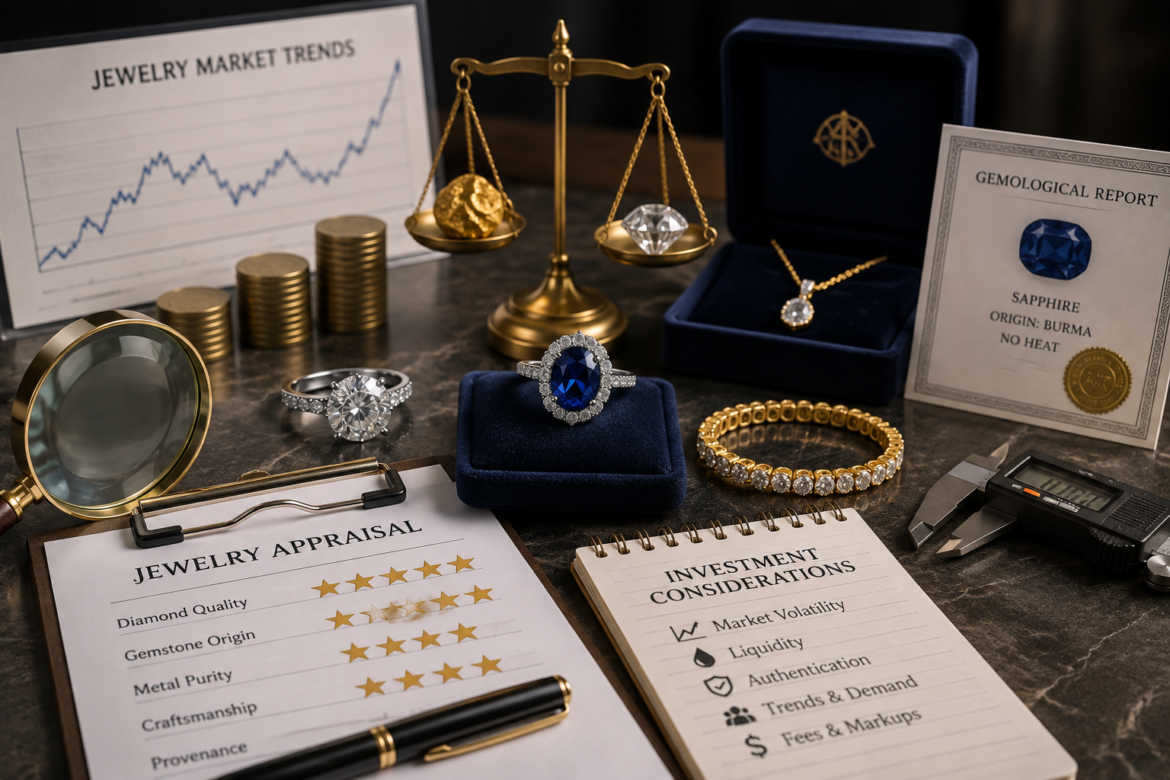
Work with credentialed professionals who specialize in investment-grade pieces. Look for recognized gemological training and experience with the specific category you’re buying (diamonds, colored stones, signed vintage, etc.). Request documentation that details the 4Cs for diamonds, origin and treatments for colored stones, metal purity, hallmarks, and any brand signatures. The more transparent the report, the easier it is to benchmark value.
Anchor your expectations to recent, comparable sales in the same channel. If you plan to sell via auction, study hammer prices and net proceeds after fees for similar items. If you’ll sell to dealers, understand their typical buyback ranges. This reality check helps you avoid overpaying at retail and sets a clearer path to break-even or profit.
Diversify within jewelry. Don’t put all your capital into one stone type, brand, or era. Consider a mix of high-liquidity items (e.g., certified diamonds in popular ranges, certain signed pieces) and longer-hold rarities with strong provenance. Keep records of appraisals, certificates, and purchase receipts, and update valuations every few years to reflect market changes.
Finally, budget for the full cost of ownership. Secure storage, insurance premiums, periodic re-appraisals, and eventual selling fees all affect net returns. When you model your investment, include these ongoing costs and the likely fee drag at exit. That way, your target appreciation is realistic, not optimistic.
Bottom Line for Investors
Valuing and appraising jewelry for investment is hard because the asset is unique, the market is fragmented, fees are high, and standards vary by purpose. Appraisals can be inflated for insurance, resale prices lag fair market value after fees, and trends can shift quickly. But with the right expertise, clear valuation purpose, and disciplined buying and documentation, you can reduce risk and make jewelry a more predictable part of your portfolio.