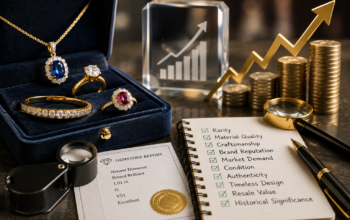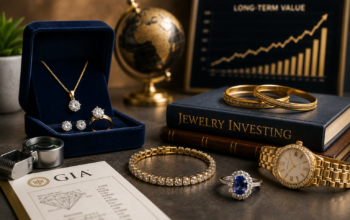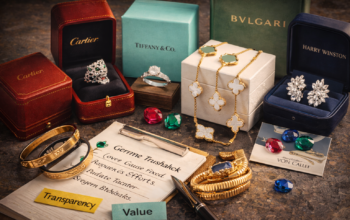

The amount of value that jewelry loses after purchase depends on a number of factors. One of the most important factors is the quality of the jewelry. High-quality jewelry, made from precious metals and gemstones, typically retains its value better than lower quality jewelry, which may be made from cheaper materials.
Another important factor is the age of the jewelry. Antique and vintage jewelry is often more valuable than newer jewelry, and may hold its value better over time. However, it is also important to consider that antique and vintage jewelry may have been previously worn, and may show signs of wear and tear, which can affect its value.
The overall market conditions for jewelry can also have an impact on the value of jewelry. If the market for jewelry is strong, and there is high demand for certain types of jewelry, the value of the jewelry may increase. Conversely, if the market for jewelry is weak, the value of the jewelry may decrease.
It is also important to consider that the value of jewelry can be influenced by fluctuations in the price of precious metals and gemstones. If the price of gold, silver, or diamonds rises, the value of jewelry made from these materials may increase, while a decrease in the price of these materials can result in a decrease in the value of the jewelry.
In addition to these factors, the condition of the jewelry is also important. Jewelry that is well-maintained and free from damage, such as scratches or chips, is more likely to hold its value over time. Conversely, jewelry that is damaged or poorly maintained may lose value over time.
Additionally, it is important to be aware of the potential for depreciation in value over time. Jewelry, like any other physical asset, can lose value due to factors such as wear and tear, damage, and changes in fashion and trends. For example, if a particular style of jewelry falls out of fashion, it may be less valuable than it was in the past.
To minimize the risk of depreciation in value, it is important to invest in jewelry that is timeless and classic in style. For example, diamond stud earrings or a simple gold chain are likely to retain their value better over time than more trendy, fashion-forward styles.
It is also important to store and maintain your jewelry properly. Jewelry that is well-stored and protected from damage is less likely to lose value over time. This may include storing your jewelry in a safe deposit box, or keeping it in a climate-controlled area to protect it from damage due to humidity or temperature changes.
It is also worth mentioning that jewelry can be a relatively illiquid investment, meaning that it can be difficult to sell quickly or convert into cash. This can be a disadvantage for those who may need access to their funds in a hurry, or for those who prefer to invest in more liquid assets.
Additionally, investing in jewelry can carry certain risks, such as the risk of theft or loss. To minimize these risks, it is important to properly insure your jewelry, and to take steps to secure it when it is not being worn.
It is also important to keep in mind that the jewelry market is not regulated, and as such, there may be a higher risk of fraud or misrepresentation. To minimize this risk, it is important to purchase jewelry from reputable dealers, and to have any pieces that you are considering purchasing appraised by a certified gemologist or appraiser.
Another factor to consider is that jewelry, like any physical asset, can be subject to market fluctuations and economic conditions. During times of economic uncertainty, the demand for luxury goods such as jewelry may decline, leading to a decrease in value. On the other hand, during times of economic prosperity, the demand for jewelry may increase, leading to an increase in value.
It is also worth considering that the value of jewelry can be subjective, and can be influenced by personal taste, cultural and social norms, and historical and emotional significance. For example, an antique piece of jewelry that has been passed down through a family may have significant sentimental value, but may not have a high market value. On the other hand, a piece of jewelry that is in high demand due to its design, craftsmanship, or rarity, may have a high market value, but may not hold much personal significance to its owner.
In addition, the cost of jewelry can vary greatly depending on the type of metal, gemstones, and design. For example, a piece of jewelry made from gold and diamonds will typically be more expensive than a piece made from silver and cubic zirconia. When investing in jewelry, it is important to consider the cost of the piece, as well as the potential for appreciation or depreciation in value over time.
It is also important to keep in mind that the market for jewelry can be affected by various factors such as changes in fashion trends, technological advancements, and shifts in consumer preferences. For example, if there is a shift in consumer preference towards more sustainable or ethical jewelry, the demand for traditional or non-sustainable jewelry may decline, leading to a decrease in value. On the other hand, if there is an increase in demand for a certain type of jewelry, such as vintage or antique pieces, the value of these pieces may increase.
Finally, it is important to remember that the value of jewelry is subjective, and can be influenced by personal tastes and preferences. What is valuable to one person may not be valuable to another, and the value of jewelry is ultimately determined by what a buyer is willing to pay for it.
The amount of value that jewelry loses after purchase can vary widely, depending on a range of factors, including the quality of the jewelry, its age, market conditions, fluctuations in the price of precious metals and gemstones, and its condition. To ensure that your jewelry retains its value, it is important to invest in high-quality jewelry, take good care of it, and understand the factors that can affect its value. It is also a good idea to seek professional financial advice, to ensure that you are making the best investment decisions for your unique financial situation and goals.